Skip to content
809/36, Negombo Road, Mabola, Wattala
Linkedin
Instagram
Facebook
+94 77 368 8979
[email protected]
About Us
Fumigation
Fumigation Defined
Methyl Bromide
Aluminum Phosphide
Pest Control Services
Residential Pest Control
Commercial Pest Control
Termite Control
Resources
Pest Library
About Us
Fumigation
Fumigation Defined
Methyl Bromide
Aluminum Phosphide
Pest Control Services
Residential Pest Control
Commercial Pest Control
Termite Control
Resources
Pest Library
Contact Us
About Us
Fumigation
Fumigation Defined
Methyl Bromide
Aluminum Phosphide
Pest Control Services
Residential Pest Control
Commercial Pest Control
Termite Control
Resources
Pest Library
About Us
Fumigation
Fumigation Defined
Methyl Bromide
Aluminum Phosphide
Pest Control Services
Residential Pest Control
Commercial Pest Control
Termite Control
Resources
Pest Library
Contact Us
Australian Cockroach
Identification
Behaviour
Signs of Infestation
Health Risks
Additional Information
Need Help?
Get in touch with one of our experts.
Contact Us
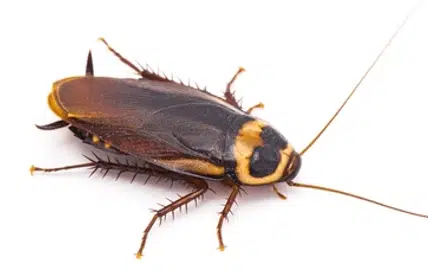
Identification
Physical description:
Large, reddish-brown cockroach with a flattened body.
Adults are typically 25-35mm long.
Wings extend beyond the body, but they rarely fly.
Have long antennae and prominent spines on their legs.
Habitat:
Prefer warm, humid environments.
Found both indoors and outdoors.
Common in kitchens, bathrooms, laundry rooms, and basements.
Hide in cracks, crevices, and behind appliances.
Feeding habits:
Omnivorous, scavenging for food scraps, decaying matter, and pet food.
Also, eat paper, cardboard, and fabrics.
Behaviour
Life cycle:
Females lay egg capsules containing 20-30 eggs.
Nymphs hatch and go through several moults before reaching adulthood.
The entire life cycle takes about 6-12 months.
Activity patterns:
Primarily nocturnal, most active at night.
May be seen during the day if the infestation is severe.
Signs of Infestation
Visual signs:
Live or dead cockroaches.
Droppings (small, dark pellets).
Egg capsules (brown, purse-shaped).
Smear marks (dark stains left by cockroaches).
Behavioural signs:
Musty odor, especially near harborage areas.
Rustling sounds at night.
Health Risks
Potential health hazards:
Can trigger allergies and asthma.
May carry and spread bacteria, viruses, and parasites.
Contaminate food and surfaces with their droppings and body parts.
Additional Information
Australian cockroaches are considered a significant pest in Sri Lanka.
They can be difficult to control due to their ability to hide and reproduce quickly.
A combination of sanitation, exclusion, and professional pest control is often necessary for effective management.