Spiders

Need Help?

Get in touch with one of our experts.

Sri Lanka boasts a rich biodiversity, and spiders are no exception. Spiders are crucial partners in Sri Lanka’s ecosystem, acting as natural pest controllers by keeping insect populations in check. The island nation boasts a remarkable diversity of spiders, with over 589 recorded species. Interestingly, more than half (318) are endemic, meaning they’re found nowhere else in the world! While all spiders have venom to subdue prey, only a very small number of Sri Lankan species are considered truly poisonous to humans. So, the next time you see a spider, remember it’s likely a beneficial resident keeping your home free of unwanted insects.

Identification

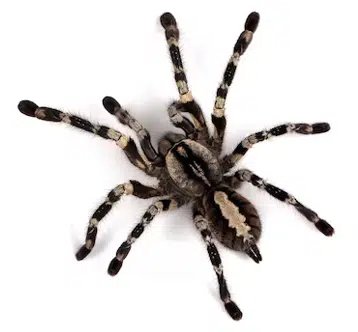
  • Physical description: Spiders have eight legs and two body parts – a cephalothorax (fused head and thorax) and an abdomen. They possess chelicerae (fangs) with venom for subduing prey and injecting digestive enzymes. Sizes vary greatly, from tiny jumping spiders to large Huntsman spiders.
  • Habitat: Spiders occupy diverse habitats in Sri Lanka. Web-builders favor sheltered areas like eaves, corners of rooms, and gardens. Hunting spiders live in leaf litter, under rocks, or on vegetation. Some even dwell in burrows.
  • Feeding habits: All spiders are predators. Web-builders trap prey in their webs, while hunting spiders actively stalk and capture their food. Their diet primarily consists of insects and other invertebrates.

Behaviour

  • Life cycle: Spiders undergo metamorphosis with three main stages: egg sac, spiderling, and adult. The female lays eggs in a silken sac, and spiderlings emerge after hatching. They molt (shed their exoskeleton) several times as they grow into adults.
  • Activity patterns: Activity varies depending on the species. Web-builders are generally inactive during the day, repairing or rebuilding their webs at night. Hunting spiders can be active during the day or night, depending on their prey availability.

Signs of Infestation

Technically, spiders aren’t considered infestations as they don’t reproduce exponentially or damage property. However, their presence can be unsettling for some.

  • Visual signs: The most obvious sign is the presence of spiderwebs, particularly large orb webs in gardens or corners of rooms. You might also see live spiders themselves.

Health Risks

Most spiders in Sri Lanka are harmless to humans. They typically only bite in self-defense if threatened or cornered. The bites of most Sri Lankan spiders are mild and cause localized itching and swelling.

  • Medically significant spiders: A few species in Sri Lanka have more potent venom, such as the Red-legged Huntsman spider (Heteropoda venatoria) and Brown recluse spider (Loxosceles reclusa). However, bites from these spiders are rare and usually only occur with extreme provocation.

Management

If you find spiders in your home and prefer them not to be there, here are some options:

  •  Relocation: Carefully capture the spider with a cup and relocate it outdoors.
  • Vacuuming: Vacuum up webs and spiders you don’t want around.
  • Exclusion: Seal potential entry points to prevent spiders from coming inside.
  • Spider repellents: Some natural repellents like peppermint oil or citrus sprays may deter spiders (although effectiveness can vary).

Remember, spiders play a valuable role in pest control. If they’re not causing problems, consider leaving them be.